If you’re traveling to South Dakota for the Custer State Park Buffalo Roundup September 24–26, 2026, you’re already planning to experience one of the most unforgettable events in the Black Hills. But while you’re here, don’t stop with the buffalo.
The Mammoth Site in Hot Springs, South Dakota, is less than an hour from Custer State Park and makes a perfect addition to your Buffalo Roundup weekend.
After watching one of America’s great living herds thunder across the prairie, travel back more than 100,000 years and come face-to-face with some of the Black Hills’ most remarkable prehistoric residents.
What Else Should I Do During Custer State Park Buffalo Roundup Weekend?
The Buffalo Roundup is the centerpiece of the weekend, with the official roundup taking place Friday, September 25, 2026. The Buffalo Roundup Arts Festival runs Thursday through Saturday, September 24–26.
If you’re spending several days in the Southern Black Hills, one of the easiest additions to your itinerary is The Mammoth Site of Hot Springs.
Located just south of Custer State Park in Hot Springs, The Mammoth Site is a world-class, nonprofit museum and active paleontological site built directly over an ancient Ice Age sinkhole.
And unlike most Black Hills attractions, the experience is completely indoors and climate controlled.
That can be especially welcome during late September in South Dakota, when the weather can range from warm sunshine to chilly temperatures, wind and rain—sometimes all in the same weekend.
How Far Is The Mammoth Site From Custer State Park?
The Mammoth Site is less than an hour from Custer State Park, making it an easy addition to a day exploring the southern Black Hills.
Even better, the drive itself can be part of the experience. Traveling through the Southern Black Hills toward Hot Springs gives visitors another opportunity to enjoy the scenery that makes this corner of South Dakota so special.
Whether you’re staying in Custer, Hill City, Keystone, Rapid City or elsewhere in the Black Hills, The Mammoth Site is worth adding to your Buffalo Roundup itinerary.
Why Visit The Mammoth Site After the Buffalo Roundup?
The connection is almost too perfect.
At Custer State Park, you’ll experience thousands of pounds of living Ice Age heritage as bison move across the prairie.
At The Mammoth Site, you’ll step even farther back in time.
More than 100,000 years ago, mammoths and other animals became trapped in a spring-fed sinkhole at what is now Hot Springs, South Dakota. Today, that ancient sinkhole is preserved exactly where it was discovered.
Visitors don’t just see fossils displayed behind glass.
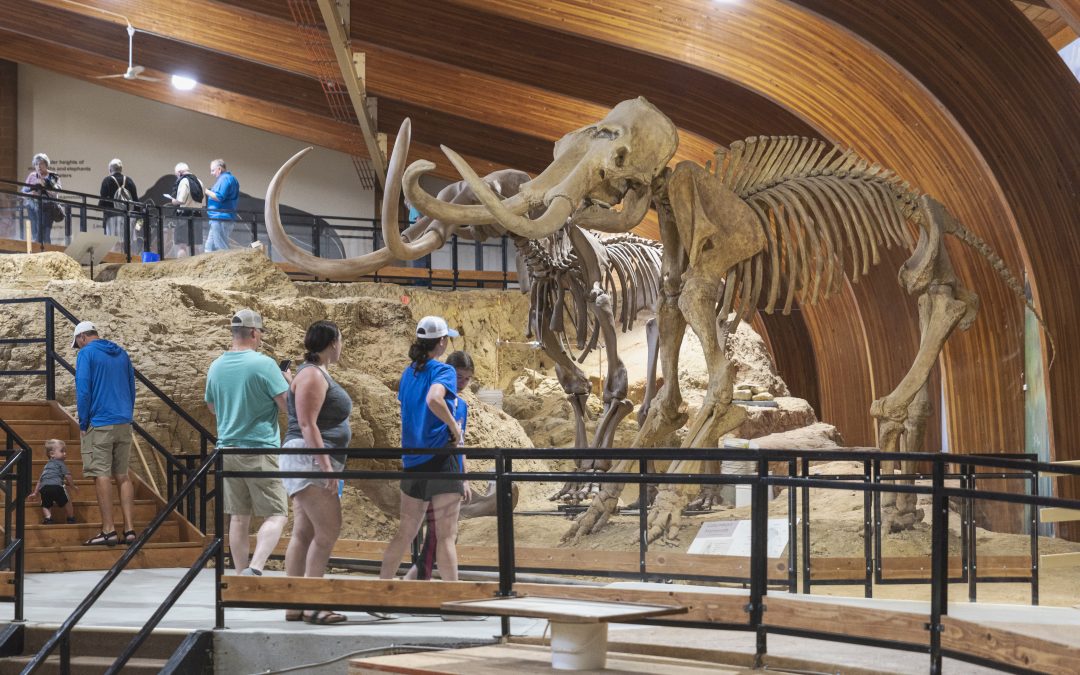
You stand above the actual excavation site and see mammoth remains preserved where they were discovered.
More than 60 mammoths have been identified at The Mammoth Site, including Columbian and woolly mammoths, along with remains from dozens of other Late Ice Age species.
The result is something very different from a traditional natural history museum.
The museum is the fossil site.
Is The Mammoth Site a Working Paleontological Dig Site?
Yes.
The Mammoth Site is an active paleontological site, research facility and museum. The ancient sinkhole and its fossils have been preserved inside a building, allowing research, excavation, conservation and public education to continue at the same location.
The Mammoth Site is also an American Alliance of Museums accredited museum and a 501(c)(3) nonprofit organization dedicated to preservation, research and education.
Your admission doesn’t simply provide a great vacation experience—it helps support the continued preservation and study of this extraordinary Ice Age site.
Is The Mammoth Site Good for Families?
Absolutely.
The Mammoth Site is one of the best family attractions in the Black Hills because it combines science, history and discovery in a way that both adults and children can enjoy.
Families can explore the mammoth-filled Bonebed, learn about Ice Age animals, discover how paleontologists uncover and preserve fossils, and explore exhibits throughout the museum.
It’s educational without feeling like school—and it’s the kind of place where kids and adults often find themselves equally fascinated.
What Can I Do Near Custer State Park if the Weather Is Bad?
This is one of the biggest reasons to put The Mammoth Site on your Buffalo Roundup weekend itinerary.
The Mammoth Site is fully enclosed and climate controlled.
Rain? Come see the mammoths.
Cold September morning? Come see the mammoths.
Windy afternoon? Come see the mammoths.
Unexpectedly warm fall day and ready for a break indoors? You guessed it—come see the mammoths.
Because the entire paleontological site is protected inside, The Mammoth Site is one of the best indoor attractions near Custer State Park and one of the best rainy-day activities in the Black Hills.
You don’t have to plan your visit around the weather.
How Long Should I Plan to Spend at The Mammoth Site?
Most visitors should plan approximately one to two hours to explore The Mammoth Site, although guests with a strong interest in paleontology, natural history or science may want to stay longer.
The self-guided experience allows you to explore at your own pace, making The Mammoth Site easy to fit into a larger Black Hills itinerary.
During Buffalo Roundup weekend, The Mammoth Site is open daily from 9:00 a.m. to 5:00 p.m.
What Makes The Mammoth Site Worth Visiting?
The Mammoth Site isn’t a recreation of an Ice Age fossil site.
It is the Ice Age fossil site.
The building protects the actual sinkhole, fossils and excavation area where mammoths were discovered in Hot Springs more than 50 years ago.
Today, The Mammoth Site is recognized as a world-class center for mammoth research and one of North America’s premier fossil interpretive sites.
It has also been voted the Best Museum in the Black Hills four years in a row.
For visitors already coming to western South Dakota to experience the natural beauty, wildlife and history of Custer State Park, The Mammoth Site adds an entirely different chapter to the story.
Make It a Buffalo and Mammoth Weekend
There may be no better weekend to experience the past and present of the Black Hills.
Friday morning: Feel the ground shake as Custer State Park’s bison herd moves across the prairie during the Buffalo Roundup.
Later that day or during the weekend: Head south to Hot Springs and travel back to the Ice Age at The Mammoth Site.
One experience celebrates the incredible animals still roaming the Great Plains.
The other introduces you to the giants that roamed this region long before us.
Together, they make for an unforgettable South Dakota experience.
Frequently Asked Questions About Visiting The Mammoth Site During the Buffalo Roundup
When is the 2026 Custer State Park Buffalo Roundup?
The official Custer State Park Buffalo Roundup is Friday, September 25, 2026, beginning at approximately 9:30 a.m. The Buffalo Roundup Arts Festival takes place September 24–26, 2026.
Is The Mammoth Site close to Custer State Park?
Yes. The Mammoth Site in Hot Springs is less than an hour from Custer State Park, making it an easy addition to a Buffalo Roundup weekend or Southern Black Hills road trip.
Is The Mammoth Site indoors?
Yes. The entire Mammoth Site is enclosed inside a climate-controlled building, including the active paleontological site and Bonebed. It is a great Black Hills attraction regardless of rain, wind, heat or cold.
Is The Mammoth Site a real fossil site?
Yes. The Mammoth Site was built directly over the ancient sinkhole where the fossils were discovered. Visitors see mammoth fossils preserved in the actual location where they were found.
Is The Mammoth Site good for kids?
Yes. The Mammoth Site is a family-friendly attraction combining mammoths, fossils, science, natural history and hands-on learning opportunities.
How much time do I need at The Mammoth Site?
Most visitors should allow approximately one to two hours, although visitors interested in paleontology and Ice Age history may choose to spend longer.
What are The Mammoth Site’s hours during Buffalo Roundup weekend?
The Mammoth Site is open daily from 9:00 a.m. to 5:00 p.m. during September.
Plan Your Visit to The Mammoth Site
If you’re coming to the Black Hills for the 2026 Custer State Park Buffalo Roundup and Arts Festival, make the most of your trip.
You’ve come this far to see the buffalo.
Now come meet the mammoths.
The Mammoth Site
Hot Springs, South Dakota
Open daily | Fully indoors | Climate-controlled | Family-friendly Make The Mammoth Site part of your Buffalo Roundup weekend and discover why visitors from around the world make the trip to Hot Springs to experience one of South Dakota’s most extraordinary places.